August 25, 2025

Part II: Single Origin Coffee


Single origin coffee preparation by Hannah Ababa at an Ethiopian ceremony


*This is the second part of my three-part treatise on coffee.

Preamble

Attributes

Cafés are places where people enjoy coffee among other benefits but are not necessarily the same and the selection of coffee offered are not the same. Most places offer a blend of coffee beans to minimize transaction cost associated with sourcing, make low quality saleable, gain economies of scale and maximize profits. This situation creates a condition where consumers can source coffee from three main outlets; a mainstream café or store, a specialty café with blended coffee beans, and a café with single origin coffee. My direct observation of these outlets for patronage indicates that mainstream cafés have an average[1] of 30 people/hr (morning), 17 people/hr (afternoon), and 12 people/hr (evening) excluding drive through. The specialty cafés with blend coffee have on average 26 people/hr (afternoon), and 25 people/hr (evening: most are closed by 6pm after COVID-19). The cafés with single origin coffee have an average of 24 people/hr (morning) and 15 people/hr in the afternoon. Public holidays, summer periods, and weekends all affect the number of customers.

The payment method in the cafés also differ among different generations. GenZ[2] people usually pay with smartphone; millennials[3] use smartphones or card more often; GenX[4] tend to use cards, and the baby boomers[5] and silent generation[6] usually use cash or cards. Exceptions exist; for example, I have preferences for the use of cash though I am a GenX, because it allows me to monitor my expenditure and it’s an austerity measure. There is a possibility that the payment method is a function of the prevailing technology when each group started handling financial transaction. The payment behaviour of consumers was observed with our extensive coverage of cafés in Ontario. Moreover, the use of smartphones was more pronounced in mainstream[7] cafés as compared to specialty cafés. The drive through culture was also non-existent in specialty cafés and fourth wave plus (4thW+). Specialty cafés are ahead of mainstream cafés with respect to innovative subscription models. They also seem to be a safe space for women. The population of women in specialty cafés is higher than males as observed in my ten years exploration of specialty cafés.

The general impression is that there are three types of coffee roasts, light, medium, and dark. Most of the exceptional single origin coffee are light roast to bring out the flavour and notes of the coffee. Apart from the known types of coffee roast, there is a type of roast that is not popular because some coffee drinkers don’t see it as coffee. This is referred to as white coffee. ‘White coffee’[8] is not well documented. It is referred to as biji kopi putih in Indonesia but the one I consumed was roasted at Cavan with coffee beans from Las Nubes Farm, Oaxaca[9], Mexico. A white coffee is produced when coffee beans spend half of the time they are supposed to spend in a roaster at half of the temperature. Roasting stops before sugar caramelizes. As indicated by a chief roaster during my field work, the caffeine content is not necessarily more than light, medium, or dark roast. Specie, variety, and production technique are the most important factors in terms of caffeine content.  It has a savoury, mild, and nutty taste[10]. It can be consumed with or without milk but it’s better with oat milk (non-dairy)[11]. The addition of oat milk is complimentary and adds to the smoothness of the drink including health and sustainability reasons. There are no sediments whatsoever, the glass cup was clean after consumption.

White coffee with oat milk


Health Implications

Doepker and her colleagues in 2022 posit that policy that directs consumers to avoid drinking coffee may be detrimental because an increase in consumption of coffee may promote public health. Recent studies also indicate that drinking your coffee black increases longevity. Coffee consumption is even more desirable if the coffee beans are grown ethically and organically. Conventionally raised coffee may inadvertently lead to the consumption of chemical residues. Consumption of coffee is also associated with lower risk of depression and anxiety.  

The health benefits of coffee because of its antioxidants notwithstanding, caffeine consumption make some people nervous and unable to sleep. The panacea is to consume coffee early in the day or consume decaffeinated products. Alternatively, such consumers can consume non-caffeinated beverages like red cappuccino from rooibos, a plant with geographical indications that can only be grown in the Cederberg region of South Africa.

The implication on health is enhanced by the consumption of single origin coffee because they are supposed to be organic and traceability is easy, and beans are usually of high quality unlike a blend which at times can be a way of selling low quality or damaged beans.


Single Origin

A single origin coffee is from a coffee bean which is grown and harvested from a specific location. The location can be a farm, group of farms, cooperative, or country. Under the fourth wave plus (4thW+)[12], single origin should be a single producer (With the name of the farmer on the label) or a group of farms in the same neighbourhood who belong to a cooperative. There is also what is referred to as a field blend, where different cultivars/varieties are grown on the same land. Dating is very important in the production of single origin coffee and the 4thW+ regime. Date of planting, harvest, processing, and roasting are well documented and published on the label. Single origin coffee is for a niche market and is the highest end of specialty coffee. Coming exclusively from a region ensures that the flavours, unique taste, and quality are guaranteed. Coffee is picked by hand, and it makes the growing and production labour intensive.

Large producers such as Brazil practice mostly mechanized farming. The challenge with mechanized production is that it mixes ripe and unripe berries together and coffee beans out of this process are mostly used for instant low-quality coffee. Unlike, Panama where coffee farms are small and mostly interested in producing high Arabica coffee. Cooperatives are important for processing to gain economics of scale – reduce per unit cost. Moreover, high attitude coffee produces fruity and floral favour, and this is the reason why roasters indicate the altitude of the farm where the coffee was grown on the label.

The stages of coffee processing start with red berries, then wet parchment, dry parchment after drying. The green coffee is the next stage after the dry parchment, and the final stage is the roasted coffee. Single origin coffees are usually light roast unlike commodity coffee that are dark roast a technique usually used to cover defects and make the product bitter – the expectation of most people of what coffee should taste like. Single origin coffees are supposed to taste differently, and this is the reason why Sidamo, Yirgacheffe, and Harrar coffees all taste and smell differently even though they are from the same country.

One of the challenges with the sustainability of single origin and coffee in general is the rising temperature and erratic rainfall because of climate change. This challenge will require the growing of Arabica, the most preferred coffee, under regenerative agriculture and agroforestry. There are also coffee species, apart from Coffea arabica (Arabica) and Coffea canephora (Robusta), indigenous to Sierra Leone and DRC that are able to thrive with the challenges of climate change.  Examples of lost species in Sierra Leone are Coffea stenophylla which when brewed seems to be tastier than Arabica and Coffea affinis. The specie indigenous to DRC is Coffea dewevrei – Excelsa.


Bugisu Arabica coffee from carefully selected gardens at an altitude above 2000 metres above sea level on the slopes of Mount Elgon in Eastern Uganda


Single Origin and Geographical Indications: The Nexus

A geographical indication (GI) is a label on a product that indicates that product is from a specific location and exhibit the attributes associated with the location. A single origin coffee is a type of geographical indications without a recognized certification as intellectual property. Some single origin coffees already have certification as GI. For example, the World Intellectual Property Organization (WIPO) has assigned appellation of origin to single origin coffees such as AO840: Café Veracruz (Mexico); AO852: Café Chiapas (Mexico); AO893: Café Villa Rica (Peru); AO902: Café Machu Picchu (Peru); AO1151 TARRAZU (Costa Rica). Furthermore, the European Union (EU) also accepted GIs for El Salvador’s Café Alotepec, Balsamo Quezaltepec, Cacahuatique, Chichontepec, and Tecapa Chinameca in June 2022.


 Preference for Single Origin: An Explanation

Imagine Mr. A has the option to consume coffee in three places. The first place is a mainstream café (CM), the second place is a specialty café where they offer blend coffee (CB), and the last place is specialty café with single origin coffee (CS). The utility derived from the consumption of mainstream coffee is U(CM), while that of blend and single origin coffee are U(CB) and U(CS) respectively.

Suppose Mr. A has spent 10 years visiting mainstream cafés, eight years consuming coffee at café with blended coffee, and six years exploring single origin cafés. The experience of Mr. A is presented below:

Mainstream café: coffee is bitter and there is need to add sweetener and milk to douse the acidity of the beverage. Baristas are interested in the volume of sales and not necessarily quality of service. Ambience is good but not extraordinary, and traceability is not published.

Blend coffee café: attention to details better than mainstream, different roasts are available, and baristas have an idea of the origin of the coffee. Products are organic, and artisanal. Ambience is a worthwhile experience, and the attitude of baristas is commendable. They get to know the regulars and offer them bespoke (customized, off the menu drinks) occasionally.

Single origin café is based upon: single origin served, chemistry enhance flavour, meticulous attention paid to the process from growing of the coffee plants to brewing the coffee at the café. Baristas are familiar with regulars and initiate a conversation with explorers’ and newcomers to educate them about the coffee they are drinking. Furthermore, different coffees are available based on origin, processing, roasting (light, medium or dark roast) coupled with the fact that they change their menu weekly or biweekly[13]. Consumers do not need to add sweeteners because the original sweetness of the Arabica coffees[14] comes out with the appropriate roasting, grinding and brewing. 

The scenarios presented above creates an incentive for Mr. A to visit the single origin café more. In other words, U(CS) > U(CB) > U(CM), the utility derived from the single origin specialty café U(CS) is more than the blend coffee café U(CB) and the least preferred is the mainstream café U(CM).

The desirability of single origin café is logical based on the premises presented above. But what about the price? Premium single origin coffee can cost between $9 and $12 CAD per serving. A package of roasted beans can cost between $25 - $50 CAD /250g. These coffees are pricey because beans are organic, artisanal, ethically sourced, and farmers are well compensated. The information about free on board (FOB) and farm gate prices, and other important attributes of the coffee are published on the label - an important attribute of 4thW+. It should be noted that a cheap coffee might have created precarious work conditions along the value and supply chains. Quality is also compromised when food is mass produced. Finally, single origin coffee will trump blended coffee an expensive price notwithstanding.


Labelling of single origin coffee under 4thW+


Exploring Single Origin

During my exploration of the single origin coffee landscape, I consumed more than 50 products from different parts of the world. One of the major lessons I learned is that coffee does not necessarily need to be bitter, the taste of coffee is a function of the variety, where it’s grown, climatic condition, post harvest handling and processing (natural, washed, fermentation approach, etc.), and the roasting technique (light, medium, and dark). Examples of single origin coffees are presented in the table below.

Examples of Single Origin Coffees

Name/Roaster

Country of Origin

Variety/Process

Notes

Bekele Kachara/Cavan

Ethiopia

Jimma Agricultural Research Centre (JARC)/Natural

Blueberry, hazelnut, lemon, and ginger cream.

Benjamin Lopez/Subtext

Guatemala

Caturra &Yellow Bourbon/Washed

Chocolate, cherry, dried fruit and round

El Vergel/Cavan

Colombia (Tolima)

Caturra/Anaerobic, fermented E.A decaffeination

Subtle hibiscus, cinnamon, and jasmine.

Enrique Lopez/Subtext

Mexico

Geisha/Black honey

Root beer, earl grey, clementine, complex, vibrant acidity, and sophisticated.

Frank Torres/Subtext

Colombia

Geisha/Washed Carbonic Maceration

Lychee, mango, floral juicy, and complex.

Peanut Brittle/September

Brazil

Caturra/Natural

Peanut butter, salted caramel, chocolate, after effect is great.

Pepe Jijon/Phil & Sebastian

Ecuador (Intag Valley)

Sidra/Washed

Butter, flora, white tea, sage, sophisticated and easy to drink.

Rumba/DAK

Ethiopia

Landraces/Semi anaerobic, Natural

Umami, stewed strawberry, and excellent taste.

Tony Medina/Subtext

Guatemala

Caturra/Washed

Hazelnut, dried dates, toffee, and mild bitterness.

Yirgacheffe/Planet Bean

Ethiopia

Ethiopian heirloom/Washed

Bold, juicy, black tea, moderately acidic, and magnificent aroma.

Source: Cavan Coffee, Kanoo Coffee, Planet Bean, Personal observation and consumption (2023 - 2025).

The most expensive among the coffees on the tables was Frank Torres, it cost $12 CAD/serving. In terms of aroma, Yirgacheffe is the most outstanding.


A Field Survey

Consultation with people in different parts of the world indicates that most people are not familiar with single origin (more than 90%)[15]. For further empirical details we administered a survey to 291 undergraduate students in a private university in Nigeria[16] in October 2024. Their age was between 15 and 27, the average age was 18 years; 80% drink tea while 50% drink coffee. There was an indication that there is preference for tea as compared to coffee among the undergraduate students. The breakdown of the consumption of coffee indicates that the highest number of the consumers drink latte (30%) followed by cappuccino (26%), and then espresso (20%).  Their knowledge of single origin coffee was insignificant – only seven respondents, out of 291, have heard of single origin coffee before the survey. Moreover, an analysis of interviews[17] of selected people, mostly millennials, in Nairobi (Kenya), between July and August 2025 indicated that they drink both tea and coffee though frequency of consumption differs. They spent between 800 and 1500 KES (Kenyan Shillings[18]) for a 500g package. Most of them have consumed single origin but they are not sure of the coffee’s actual attributes. They also struggle with the definition of single origin coffee.


A survey of undergraduate students in Nigeria indicate that they are unaware of single origin coffee


 Pour Over Coffee

The rise of ‘pour over’ is one of the attributes of 4thW+. It should be stated that drip coffee is not pour over. Drip coffee process is automated while pour over is manually controlled and customized – it is bespoke, artisanal, and well filtered. Time for preparation, lack of knowledge, and price are the deterrent to the consumption of pour over. It is cheaper if consumers buy a pack of roasted beans and brew it at home.

The process of pour over starts by boiling water to a specific temperature. The coffee beans are weighed and ground. A cone filter is then moistened with hot water after which a well measured grind of coffee is poured in the filter, hot water is then poured over the grinds for two minutes. The coffee is then allowed to steep for more than two minutes, after which the brewed coffee is released into the carafe below the filter. Baristas have a leeway to do trial and error until they perfect their pour over brew.  Pour over brings out the distinct flavours of single origin coffee and it is one of the reasons why the consumption of single origin coffee as pour over is highly recommended. An attribute of the 4thW+ is the chemistry involved in the extraction of brews. During the pour over process when hot water first contacts the coffee grounds in the filter, it results in a "Bloom". This Bloom is caused by the release of carbon dioxide (CO2) from the coffee grounds.

An example of a cultural pour over is the Vietnamese coffee (cà phê sữa nóng). This is not fully a pour over based on the 4thW+ attributes, but the coffee is also filtered using a Vietnamese Phin filter. The one we tried is from the Dak Nong province of Vietnam and it cost between $5 and $6.   The Vietnamese coffee is a partly pour over, the beans are mostly robusta (quality is not at the level of Arabica), condensed milk is part of the ingredients, and the filtration process pays attention to the “bloom” but extraction can not be compared with using a filter paper. The milk has doused the acidity of the coffee because robusta beans are more acidic. The water for the coffee preparation should be 200°F and the condensed milk should be 30g.

Whether traditional or mainstream, the use of pour over gives a cleaner brew of coffee. The consumption of pour over especially when it’s allowed to cool gives distinct notes of coffee and is easy for consumers to identify their favourite coffee based on the aroma and taste.


Brewing of Vietnamese coffee

Exploring Single Origin: A Mathematical Thesis

Production:

Based on my observations and participant observations over the years, below is a model that explains the production of single origin coffee.

SO = ALPαLβOγAδ

Where SO = Production of single origin.

            AL = Autonomous production.

            P = Consumption of ‘Pour Over’

            L = Expertise of coffee farmers

            O = Level of organicness of coffee

            A = Awareness about the desirability of single origin

α, β, γ, δ are positive integers measuring the relationship between variables and production of single origin.

As seen: SO = ALPαLβOγAδ, is a non-linear relationship as life itself is not linear.

To transform the model to a linear equation the natural logarithm (ln) of both sides was applied.

ln SO = lnAL + αlnP + βlnL + γlnO + δlnA + µ (error term). The error term accounts for the variables that are not in the model but may affect the production of SO.

The Level of organicness of coffee (O) = ƒ (organic coffee beans, climatic condition, organic cultivation, artisanal, collaboration through cooperatives) = ƒ (regenerative agriculture).

Consumption:

My interaction with baristas and my several visits to specialty cafés where single origin coffees are served led to the development of the relationship below:

            Cs = ƒ (P, I, HS, Oc, L, Ca, µ)

Where Cs = Consumption of single origin coffee

            P = Price of coffee

            I = Income

            HS = Household size

            Oc =Occupation

            Ca = Proximity to Specialty café

            µ = Other variables not covered by the model

It is also important to note that the consumption of single origin gives more information to consumers.  Consumers are in control once they are familiar with the coffee. In other words, there is reduction in asymmetric information. Whereas, when blended coffee is offered, there is asymmetric information and importers, roasters, and cafés are in control. Furthermore, Cs α P {consumption of single origin is directly related to enhanced public health}. The culture of drinking water to complement the coffee, especially sparkling or carbonated, add flavour to douce the acidity. Personal experience indicates that drinking water while consuming coffee adds to the flavour, because of chemistry, of single origin espresso. It also helps with hydration and aesthetic value.

Equilibrium:

The single origin coffee market is an evolving market, and it may be difficult to have an equilibrium condition. This is expected because producers will continue to work on desirable varieties of Arabica including strengthening the processing methods to guarantee sustainable competitive advantage. Furthermore, roasters are working on roasting techniques to enhance the flavour and aroma of the beverage. As for the consumers, who are interested in single origin coffee, they are already knowledgeable about good coffee and will become more sophisticated under the 4thW+ regime. All these scenarios make equilibrium practically impossible. The best that can occur are equilibrating tendencies because players in the market are rivals and will forever try to outdo each other.

Conclusion

4thW+ and single origin coffee have transformed stakeholders in the value and supply change to scientist. Baristas are becoming meticulous and artistic (extraordinary latte art is now part of the service in specialty cafés) concurrently. Single origin cafés also have signature dinks that can be customized, bespoke, for their regulars.

The Cup of Excellence, a global prestigious coffee competition, has become a key mechanism for locating and certifying single origin coffee. This mechanism employed more in Latin America have created and added premium to the single origin coffee from this region. But the most important variables that give a specific coffee the added value are variables related to geography such as the altitude of the farm, coffee farm size, country of origin and soil type. Enhanced consumption of single origin coffee may lead to uneven development. Scarcity due to seasonality and artisanal practices also make single origin coffee to be procured at a premium.

Regenerative agriculture coupled with community shared agriculture including subscription-based production are all desirable characteristics of sustainable production. Mixed farming of coffee with other crops such as rice and avocado is desirable based on empirical evidence from Vietnam. Organic production of single origin coffee makes the inadvertent consumption of chemicals impossible.

In the summer of 2025, the farmers were busy growing and processing the best coffees wearing their gumboots in Latin America, the roaster in Canada keep improving their roasting techniques, the cafés are getting closer to 4thW+ standards, and the consumers are enjoying the best single origin coffees as espresso, pour over, latte or drip in their Birkenstock sandals. Single origin coffee consumed as a pour over makes the notes discernable, additionally it is a better way to drink coffee black since dinking coffee black seems to be more desirable.

*Part I of the treatise is available at https://evcontario2011.blogspot.com/2025/06/part-i-understanding-coffee.html.


I acknowledge the support of the Intellectnomics Research Group (IRG).


Bamidele Adekunle|IRG & ECVOntario|SEDRD|University of Guelph


[1] Numbers vary based on location.

[2] People born between 1997 – 2012.

[3] People born between 1996 and 1981.

[4] People born between 1965 and 1980.


[5] People born between 1946 and 1964.

[6] People born between 1928 and 1945.

[7] Tim Hortons, Starbucks

[8] Consumed at Cavan Coffee based on Rufus Cavan recommendation.

[9] Thanks to Cavan Coffee.

[10] Ardent coffee drinkers don’ t see it as coffee though the caffeine is relatively the same as the normally roasted coffee.  

[11] It makes the beverage vegan.

[12] See Adekunle B. 2025. Part I: Understanding Coffee. https://bamideleadekunle.substack.com/p/part-i-understanding-coffee.

[13] Some of their products are also seasonal.

[14] Coffee does not need to be ‘bitter’

[15] Some baristas at both mainstream and specialty cafés became familiar with the concept after a discussion with us.

[16] The survey was administered by Dr. Folasade Bosede Adegboye.

[17] Interviews were conducted by Kageha Ambembo.

[18] The exchange rate as of August 12, 2025: 1CAD = 93.80 KES; 1USD = 129.24 KES (Central Bank of Kenya).  

Read More »

July 14, 2025

A Humid Evening and a Cup of Cappuccino


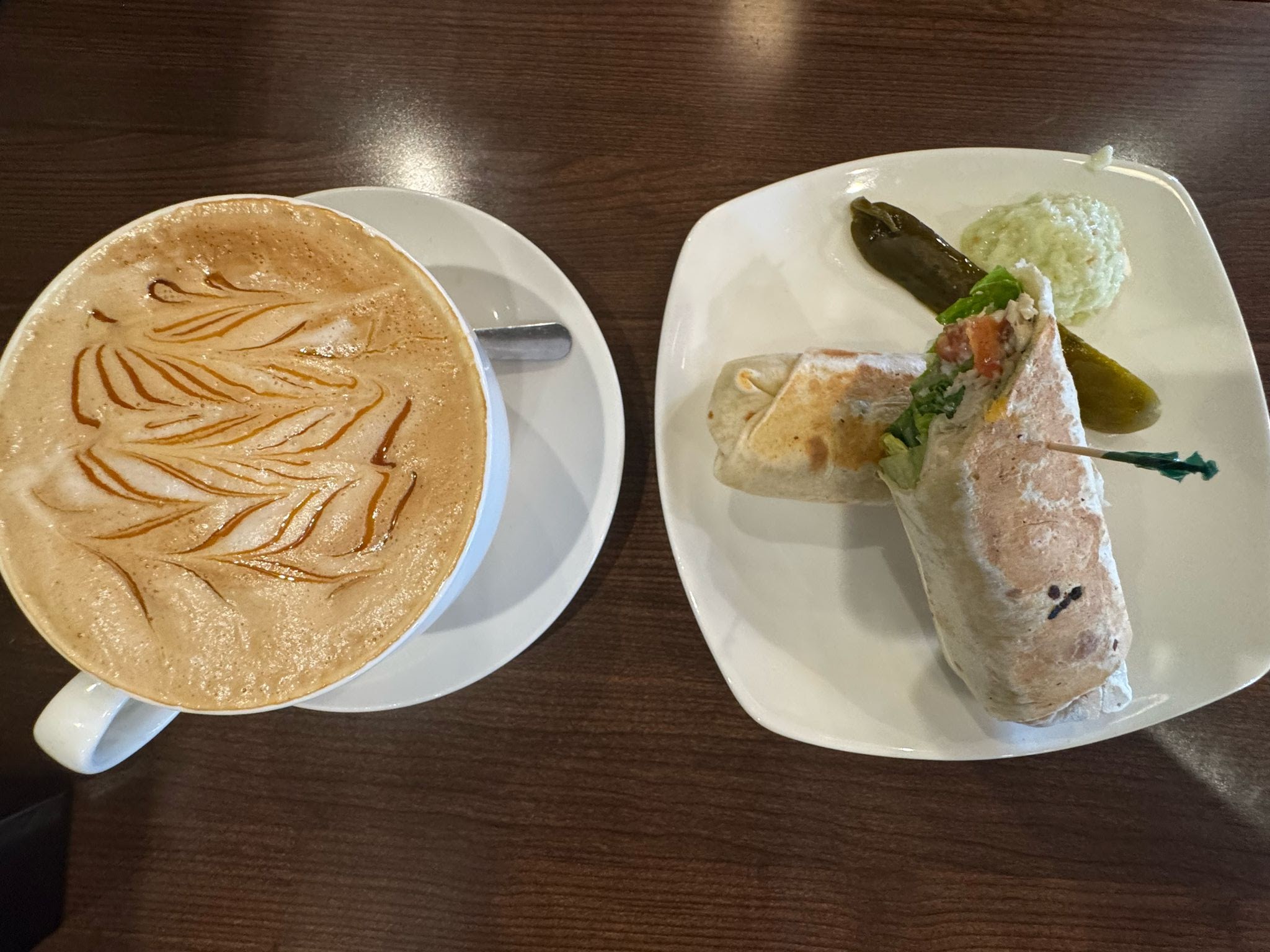
Cappuccino and Caesar Wrap


This blog began as a suggestion from my professor. I was encouraged to visit a specialty café and share my experience as an aspiring foodie exploring organic food, single-origin coffee, and Canadiano. So, on the evening of Tuesday, June 24th, I finally headed to Williams Fresh Café in Brampton with my older sister.

It was a hot and humid summer evening, with a heat warning in effect in all the Greater Toronto Area. We chose this café after reading many positive comments about it online. Also, since it was just 10 minutes away, it felt like an easy pick.

When we walked in, the first thing I noticed was how cool and comfortable it felt inside, compared to the heat outside. The café was spacious, with natural light coming in through the big front windows. Large paintings hung on the walls, showing beautiful artwork of bicycles, coffee beans, and scenic views. Along one side, there were outlets and a row of tables and chairs facing the wall, set up as a space to study or work. Behind the counter, the members of staff were busy working, and the smell of fresh coffee hung in the air.

It was quite busy considering it was a Tuesday evening. Students were typing away on laptops, small groups of people were sitting and chatting over drinks and food. The sound of piano music played softly in the background, which had a light rhythm that made the whole café feel calm.

After being seated and reading the menu, I decided to order a cappuccino with caramel flavoring and a chicken Caesar wrap. My sister also ordered a cup of cappuccino without the caramel flavoring.

The chicken Caesar wrap to go with the drink was packed with chopped grilled chicken, romaine lettuce, croutons, and Caesar dressing, all neatly wrapped. On the side, there was a sauce and a sliced pickle. Nothing too over-the-top, but it looked fresh and healthy.

The caramel cappuccino came out in a small white cup, with light foam piled on top with caramel drizzled in a careful pattern. I could tell the barista paid attention to the details. That’s part of what makes this café’s beverages feel so special. The aroma was also magnificent!

The cappuccino reminded me how popular milk-based espresso drinks have become more sophisticated (Adekunle). "A perfect cappuccino stands out from other coffee drinks...[since] it has a unique mix of espresso, steamed milk, and foam" (Foxwell). A cappuccino is one of the most classic espresso-based drinks you’ll find in a café (Adekunle). What makes a cappuccino stand out is the foam thick and airy on top (Foxwell). Sometimes, people add flavors like caramel, vanilla, or chocolate for a sweeter taste (like I did with mine).

Fresh and dark-roasted coffee beans usually work best for cappuccinos (Foxwell). Unfortunately, I was unable to find out which coffee beans were used to make the drink.


While drinking the cappuccino, I was reminded of the waves of coffee that I learned about in my Introduction to Global Management (GMS 200) course taught by Professor Adekunle.

There are four waves of coffee. Although this café cannot be categorized as a fourth wave, the fourth wave plus (4thW+) really stands out to me. It’s about sustainability, ethics, traceability, and essentially making sure that the coffee we enjoy supports farmers, the environment, and transparency in how it’s made (Adekunle). As Professor Adekunle explains further, coffee is a craft, and everything from the type of bean, to how it’s roasted, brewed, and served, reflects care, ethics, and traceability.

Since I’m not someone who usually visits cafés a lot, I wouldn’t call myself a regular. I think I’d fit into Category C, more of a casual or occasional coffee drinker who goes mainly for the experience (Adekunle).

The cozy atmosphere and the sense of belonging made the moment feel meaningful. What sticks in my mind when thinking about the success of cafés is this quote:

"Cafés keep winning because they offer what people want: a warm space, good food, and a great cup of coffee. But what really makes a café special is the connection it builds with the people who walk through the door. Create a welcoming atmosphere that makes customers feel at home and gives them a local gathering spot that they’d want to return to time and again" (Hebert).

While my cappuccino at Williams Fresh Café wasn’t necessarily a single origin or fourth wave brew, learning about the importance of authenticity in coffee helped me appreciate it more. It made me wonder about the beans used in my drink, their origin, and the story behind them (Adekunle).

If I had to rate the drink, I’d give it a solid 8 out of 10. I really enjoyed the taste, it was smooth, had just the right amount of sweetness from the caramel, and the foam made every sip feel soft and comforting. It wasn’t too strong or too sweet. Personally, I found it to be a good balance. What I like about cappuccinos is the richness of espresso with the soft texture of foam. It was overall comforting.

The Space


Hence, that evening at Williams Fresh Café allowed me to enjoy some time off my schedule. The atmosphere combined with the chill piano music playing in the background as well as my cappuccino and chicken Caesar wrap, all came together perfectly. Honestly, it wasn’t just about the drink, it was about the whole vibe. I'm glad I got the opportunity to explore the café as suggested by my professor. A warm evening and a cup of cappuccino turned into a moment I didn’t know I needed!


Harsimr Dhillon

Undergrad, Ted Rogers School of Management, TMU

Research Assistant, ECVOntario


Bibliography

Adekunle, B. 2025. Food Authenticity. ECV Ontario. https://evcontario2011.blogspot.com/2025/05/food-authenticity.html

Adekunle, B. 2025. Part I: Understanding Coffee. Substack. https://bamideleadekunle.substack.com/p/part-i-understanding-coffee

Foxwell, A. 2024. What is a Cappuccino? Tank Coffee. https://www.tankcoffee.com/what-is-cappuccino/

Hebert, R. 2025. What is a Café? 7shifts. https://www.7shifts.com/blog/café/

Read More »

June 20, 2025

Part I: Understanding Coffee


Fourth wave of coffee. Guji from Ethiopia going through the pour over funnel. This is truly a single origin.

*This is the first part of my three-part treatise on coffee.


Understanding Preferences

Coffee can be defined based on sustainable practices (organic, fair trade, ethical), brand (Starbucks, Balzac’s, Tim Horton’s, Planet Bean, Vereda Central, etc.), origin (Li Maya, Yirgachefe, Sidamo, Peruvian Café Femenino etc.), roasting approach (dark or light), variety or cultivar (Geisha, Caturra, Bourbon), process (washed, anaerobic, aerobic) and scientifically (Arabica or Robusta). These different definitions notwithstanding, people’s coffee preferences are affected by available information, culture, and lifestyle. My exploration[1] also indicates that people drink coffee for sophistication and a signal of a better quality of life though most of the time its unconscious – thus the nudge to visit a specialty café to enjoy the ambiance or buy a single origin coffee. Another classification of coffee is the way they appear on the menu of cafes such as Americano (now Canadiano in Canada), café latte, cappuccino, espresso, flat white, cortado, macchiato, mocha, among others. These beverages are mostly about the combination of milk and espresso and whether the milk is steamed or not.

Another attribute of coffee presentation in specialty café especially those in the fourth wave coffee space is the ‘Pour over'. ‘Pour over’ is a process of coffee filtration of single origin that is clean and easy to drink. ‘Pour over’ involves making coffee in a meticulous way with extractions that produces a more flavourful drink with pronounced notes and desirable aromas. There is also a nexus between single origin coffee and Geographical Indications (GI).

The consumption of coffee differs among people. Some people don’t drink coffee at all while some drink a little or occasionally, and there are frequent consumers. The propensity to consume is higher in developed countries except in countries where it is cultural like Ethiopia.

Coffee: The Journey[2][3]

Understanding coffee will be incomplete without the story about its development.  There are different myths about the creation of coffee including the Kaldi’s story that posits that the coffee originated from Ethiopia. It is also generally accepted by coffee scholars and enthusiasts that coffee truly originated from present day Ethiopia. The plant was moved from Ethiopia to Mocha in Yemen with the help of traders. It was popularized by the Sufis who made the consumption part of their religious rituals. The Turks conquered the Arabs, and coffee became part of the culture. There was a significant spread of coffee during the Ottoman Empire. Smuggling also occurred and that was how the produce entered India.

Coffee was so precious and sought after that the Dutch started growing it in Amsterdam inside greenhouses and later in their colonies in place such as Java, Indonesia – because of the climate. They forced the cultivation of coffee on the natives. The coffees, Mocha (Yemen) and Java (Indonesia), are based on the names of cities that contributed to the dissemination of coffee. Coffee was modernized in Vienna (Austria) but was perfected in Italy. The first café in Venice was in 1720. The development of coffee in France was with the help of the Italians. They were great craftsmen with the addition of authenticity and aesthetic value to the consumption of coffee.

The popularity of coffee may also have stemmed from a replacement. It allows active discussion while avoiding the alcoholic danger of drunkenness. England received coffee from Turkey in the mid 17th century although tea overtook the consumption by the end of the 17th century. Even though the consumption of coffee declined in England in the entire Europe the consumption of coffee multiplied by 20 times in century from 1700 – 1800. To increase production to match the demand, countries started developing coffee plantations in colonies and increased the use of slaves in its production, mostly from Africa. For example, the French developed plantations in Martinique and San Domingo (now Haiti) until the revolt in Haiti in 1791 that led to destruction of sugar and coffee plantations.

Brazil also developed its production of coffee using slaves. Whether in Latin America, Central or North America the growth of coffee was strengthened by slaves, indentured servants including native Indians as witnessed in Guatemala.

The new waves of coffee, starting from the third wave, expects the production and marketing of coffee to be fairly traded, organic, and traceable. So, fair-trade by the rainforest alliance, organic certification, and single origin are important attributes for which some consumers are willing to pay a premium. Furthermore, cafés are expected to be meticulous and processes more scientific.


Coffee as a Cultural Ritual

As part of my exploration of the coffee landscape, I participated in more than 10 coffee rituals at events organized by Ethiopian Canadians in different parts of Ontario from 2017 – 2025 accompanied by our research fellow who is Ethiopian-Eritrean. The coffee ceremony is an integral part of all their ceremonies. Coffee is prepared and served at mourning, festive periods, christenings, and all other get-togethers.

The food served is usually injera and different types of meat and vegetable stews. I also witnessed some eating their injera with raw meat (Tire Siga) or spiced raw meat (kitfo). The most important beverage is coffee served in the traditional way. The preparation starts with the roasting of the green coffee beans imported from Ethiopia (specifically from a particular region based on the ethnicity of the host). The smoke is perceived and allowed to diffuse around the room and the clothes of guests because it’s assumed that it brings blessings.

Along with the smoke from roasting coffee – this is done at home no matter where they are in the world, there is the burning of incense. They travel with the paraphernalia as they move around the world.  Waving of smoke towards the body by all present is recommended because Ethiopians believe that it brings good luck. Burning of incense (usually frankincense) is done throughout the ceremony as part of the ritual. After roasting, the coffee beans are ground and then brewed. The final stage is to brew the coffee[4] and serve it using a traditional cup like the cups used to serve espresso in specialty cafes. There are usually three rounds of serving: the first serving is abol, the second is tona, and the last and final serving is the blessing, baraka. My observation indicates that some people don’t consume the three rounds while some consume more.


Amaretti almond cookie and single origin espresso - Sweet Habit, and sparkling water. 


Coffee Waves: Fourth Wave Plus (4thW+)

Coffee has attributes as a plant, food, beverage and culture. It has evolved over the years with different attributes. These attributes define the different coffee waves.  The first wave coffee (20th century) was when we had commodity coffee. This was the advent of cheap and easily accessible coffee which led to a significant increase in the consumption of coffee. The second wave coffee (mid 1990s) was characterized by coffee shops, the development of brands and differentiation and competition in the coffee industry. During this period there was an increase in café visits. The third wave (late 2000s/early 2010s) was when coffee started climbing the sophistication rope. Coffee is now sympathetically roasted and “scientifically’ prepared. Preparation can be in different ways to express their complex flavours. The quality turn has made specialty café pricey.

Fourth wave is the present situation in some of the spaces in the coffee industry. It’s more scientific and both traceability and ethical production are very important. A five wave model was proposed by Giuli and Pascuss in 2014 by separating the first wave to pioneering and industrial. Based on my observation studying the coffee landscape over ten years I propose that there is a fourth wave plus (4thW+) which is inclusive futuristic, and sustainable. Under this wave coffee are custom made and there is emphasis on bespoke, ethics, direct contact with farmers, single origin, published information, excellent baristas service, and the rise of pour over.

A truly fourth wave should be bespoke production and consumption of coffee where consumers are catered to based on their preferences and in an atmosphere that complements cultures and lifestyle. The key ideas are authenticity, traceability and transparency. In other words, opacity and food authenticity are inversely related  in the fourth wave coffee market. The fourth wave plus (4thW+) is well grounded, inclusive and antifragile. This coffee wave has incorporated coffee rituals from different cultures where coffee is a staple. Some align with the Ethiopian culture, others Turkish and some are a blend of coffee cultures. The most important attribute is that 4thW+ takes people on a journey closer to the original coffee cultures where it all started.

Brazil has been the largest producer of coffee since the 19th century till date. Consumption has also increased in this country because of the continuous evolvement of the different waves of coffee and the role of different Latin American countries in the promotion of single origin coffee. This results in the strengthening of geographical indications and the ethical promotion of  intellectual property rights in the agricultural sector. 


Café Visit: Reasons

Imagine a thought experiment where there are three types of people (A, B, and C) with respect to coffee consumption. Let’s assume that out of the three categories of people who visit cafes, two of them are coffee drinkers and the last group are non-drinkers. The two categories of consumers can be sub-divided to A {cultural background; ability to discern good coffee based on tacit knowledge acquired by growing up in coffee growing community; appreciate the aesthetic associated with drinking coffee; visiting a café gives a reminiscence of the past, nostalgic and socialization} and B {based on family lifestyle; ability to discern good coffee; neutral to aesthetic value; café is seen as space for work and socialization – interactions strengthen expensive and authentic coffee}. These categories are regulars if they visit the cafes often and regulars can be regarded as café explorers because they visit cafes to learn and hopefully discover new things. These explorers are café elites if they only visit specialty cafes where coffee is organic, ethical, single origin and meticulously selected, ground, brewed and cupped by the baristas.

The last category is C. This set of people do not drink coffee because of its bitterness and caffeine, but some do drink occasionally for social reasons, and this is how cafés present other values. A subset of this group can be regarded as café loafers – people who need a place to kill time while they enjoy the ambience of the space.

All groups – A, B, and C – visit specialty cafés because of the atmosphere, and the baristas attention to details with respect to customer service. Furthermore, it is seen as a place to de-stress, a workspace with unlimited internet access, and a place to discuss new business ideas and have regular meetings.

A café can also be regarded as a third place. The third-place idea was developed by Ray Oldenburg. It’s a place that is not home or place of work and the café is a typical example. The nexus between cafes and third place is obvious at Kanoo coffee where there is no internet connection and the use of laptops is disallowed on weekends. The owners indicated that they want customers to mingle instead of staring at the screens of their laptops or smart devices. Moreover, cafés give inspiration[5]. In fact, for the GenZ and millennial, it is a place to meet people. It increases their confidence level and sense of belonging.

To confirm that the attributes in the framework or thought experiment presented above is universal, I contacted people[6] in different parts of the world[7]. A brief discussion with consumers in different parts of the world indicates that people belong to different categories with respect to their consumption of coffee. There were non-drinkers such as Tunde because of the bitter taste or Christine because of caffeine, occasional drinker like Kageha who drinks latte at Mugg & Bean as a monthly treat or to calm her nerves when there is a challenge at work, and substantial drinkers such as Dazogbo and Sridharan who drink with cream or black (without cream or milk). In my small global sample, there were more tea than coffee drinkers. This is the reason why cafes include tea prominently in their menu. In fact, there is a 4thW+ café in Cambridge, Disko Coffee, owned by a GenZ who has a signature masala tea based on a recipe from his parents based on their Indian descent. This recipe has been tweaked to suit his taste and for ownership.

Scholars, both active and retired, are addicted to a lifestyle of coffee consumption. For example, a retired professor, author, researcher, political economist and avid coffee drinker has the following impression about coffee.

“Coffee is a daily beverage for me, and I like it black. The caffeine gives me inspiration and alertness”

In sum, there are different types of coffee consumers. People who don’t drink, those who drink a little (minimal), moderate consumers, and substantial consumers. Location of the consumer also affects the level of consumption. Based on our empirical evidence, observations and discussion with people globally, Growth of fourth wave coffee = f (T, A, Tr, LAI, E, Ar, R, S, Pr, L). Where T= Transparency (+); A = Authenticity (+); Tr = Traceability (+); LAI = Level of Asymmetric Information (-); E = Exclusive customer service (+); Ar = Artisanal (+); R = Risk sharing {café, farmer, consumer} (+); S = Space (not clear); Pr = Price (+); L = Location including proximity to consumers; and other variables not captured by this model. Distance is a very interesting concept; if a café or produce market offers good quality, people will still patronize the location though the closer the better. I have documented people who travel from Guelph to Toronto (108 km) or Guelph to Cambridge (25 km) just to get a cup of coffee from a preferred café.


Single origin cortado and espresso as served at Kanoo Coffee, Guelph
                            

A definition of Sustainability

Ethical production is an attribute of the present wave and future of coffee. It is important for coffee to be organically produced or at least ecologically friendly. An organic production guarantees the healthy nutrient balance of the soil and the balance of biodiversity with respect to fauna and flora. The use of synthetic herbicides, pesticides, and fertilizers may compromise the future use of soil and enhances the extinction of important microbes and the natural interaction of prey and predators. The use of cultivars that are well developed may strengthen the adaptation of the plant to the challenges of climatic change that is more profound in this 21st century.

Coffee production and consumption should be sustainability driven from farm to table. In other words, production should be ethical, organic, traceable, authentic and transparent. Crypto-labelling, a blockchain technology, can be used to promote these desirable attributes.  The value and supply chain should be well documented, and monitoring and regulation should be appropriate, and the stakeholders should be involved in the strengthening of the value and supply chain. At cafes, baristas should pay attention to weighing, temperature and the brewing processes. This will ensure that drinks are of the best quality and flavour. In sum, sustainability is enhanced when all the stakeholders including farmers, producers, cooperatives, importers, employees along the value chain, and the consumers are all satisfied.


Conclusion:

Coffee can be defined using different parameters and consumption is a function of lifestyle and culture. The journey of coffee started in Ethiopia and is a beverage consumed globally. The Arabs helped with the movement of coffee around the world and the Italians perfected its consumption to the extent that they named an espresso adulterated with warm water as Americano (which Canadians now refer to as Canadiano because of trade policies of the United States towards Canada). With respect to culture, in the Turkish culture there is coffee cup reading where the sediments of the coffee ground in cups can be used for soothsaying and foretelling the future. There is even an app – Faladdin [8]– that can be used to implement the activity without consulting an expert.

There are different waves of coffee based on the production and consumption of the beverage. The coffee landscape became sophisticated after the third wave, and this is why the description of coffee in this essay is regarded as 4thW+ an inclusive and sustainable wave where all stakeholders are not worse off. We are not there yet but significant progress has been made.

Just like the story of coffee with different stops at different locations, ideas documented in this essay were developed on my commute between Guelph and Toronto. The conceptualization was done while drinking hojicha at Kanoo coffee and this part of the treatise was completed at Cavan Coffee. It is apparent that cafes are a place where the intelligentsia resides.

Though Nietzsche and Schopenhauer assert that it may be better not to be born, I want to take an optimistic view that only mortals write essays about the consumption of coffee and the café culture.


Bibliography:

Adekunle, B. 2016. How nations can navigate the difficult path to food sovereignty. The Conversation. How technology can help nations navigate the difficult path to food sovereignty.

Adekunle, B. 2024.  Understanding Intellectnomics. Dialectics. Substack. https://bamideleadekunle.substack.com/p/understanding-intellectnomics.

Adekunle, B. 2025. Food Authenticity. ECVOntario: Guelph. https://evcontario2011.blogspot.com/2025/05/food-authenticity.html.

Adekunle, B. and Filson G. (EP) 2023. Opacity and Food Authenticity. Behind the Aroma.  ECVOntario: Guelph. https://open.spotify.com/episode/14SFW2iMplE52PBZyMddji?si=GDeowIL-Raa04Zful38X9g.

Adekunle, B. and Filson G. (EP) 2023. Geographical Indications. Behind the Aroma.  ECVOntario: Guelph. https://open.spotify.com/episode/6CoNMldPXsfdonxIjHyBIi?si=iGPFVIHBRj6fhB3i99fKYA.

Airin M. 2024. Cup of Excellence: The Journey of the Perfect Sip. ECVOntario: Guelph. https://evcontario2011.blogspot.com/2024/03/cup-of-excellence-journey-of-perfect-sip.html.

Angelico I. 2005. Black Coffee – The Irresistible Bean, La fete Productions (Coffee) Inc. TVO/PBS.

Bielski, Z. 2024. Need a mini digital detox? These screen-free spaces nudge people offline and back into real life. Globe and Mail: Toronto.

Giuli, M., Pascucci, F., 2014. Il ritorno alla competitivita` dell’espresso italiano. Angeli, Milan. Grinspan, J., July 9, 2014. How Coffee Fueled the Civil War. New York Times. Available from: http://opinionator.blogs.nytimes.com/2014/07/09/how-coffee-fueled-the-civil-war/.

Morris, J. 2017. We Consumers – Tastes, Rituals, and Waves. In The Craft and Science of Coffee. Folmer, B. (ed.)  Academic Press: UK. chapter 19:457-491). https://www.sciencedirect.com/science/article/abs/pii/B9780128035207000190.

Oldenburg, R. and Christensen, K. (2023) Third places, true citizen spaces. UNESCO Courier: France. https://courier.unesco.org/en/articles/third-places-true-citizen-spaces.

Ozerkan F. 2023. Turkish coffee, not just a drink but a culture. UNESCO Courier: France. https://courier.unesco.org/en/articles/turkish-coffee-not-just-drink-culture.

Pendergrast M. 1999. Uncommon Grounds: The History of Coffee and How It Transformed Our World. New York: Basic Books.

Teles, C. R Arcanjo, and J.H. Behrens. 2020. “The Waves of Coffee and the Emergence of the new Brazilian Consumer.” In Coffee Consumption and Industry Strategies in Brazil, edited by Eduardo Eugenio Spers, 257–274. Elsevier.


Special thanks to Rufus Cavan, the chief roaster at Cavan Coffee and the Intellectnomics Research Group (IRG) coffee specialist – Wondimu Gashaw and fellow – Kajumba Kaahwa. Deserving special commendation is Emeritus Prof. Glen Filson for his comments on earlier drafts of this essay and the facilitation of our weekly meetings where we discuss different issues including gastronomy. I also thank El-Patron (Lennin Ruano-Ruiz), Erika Baker, Robbie McGill and Mackenzie Foote of Balzac’s Coffee Roasters, The Cavan brothers of Cavan Coffee, the baristas at Planet Bean downtown, and Kanoo Coffee (Amanda, Steve and the Baristas).


Bamidele Adekunle|IRG & ECVOntario|SEDRD|University of Guelph.


[1] Ethnographic study

[2] Melitta.“HistoryofCoffee.”MelittaUSA.(n.d.).https://www.melitta.com/en/History-of-Coffee-629.html.1


[3] Please see Irene Angelico (2005) Black Coffee – The Irresistible Bean, La fete Productions (Coffee) Inc. TVO/PBS;

Pendergrast Mark (1999), Uncommon Grounds: The History of Coffee and How It Transformed Our World. New York: Basic Books.


[4] Usually thick and dark.

[5] A place to read books or for their solitude time

[6] More than 30 people.

[7] Living in the American bubble can be deceptive.

[8] This app has more than 25 million downloads on all platforms as of 2025.

Read More »